

The future of work isn’t leaving the plant floor behind — it’s returning to it with new tools.
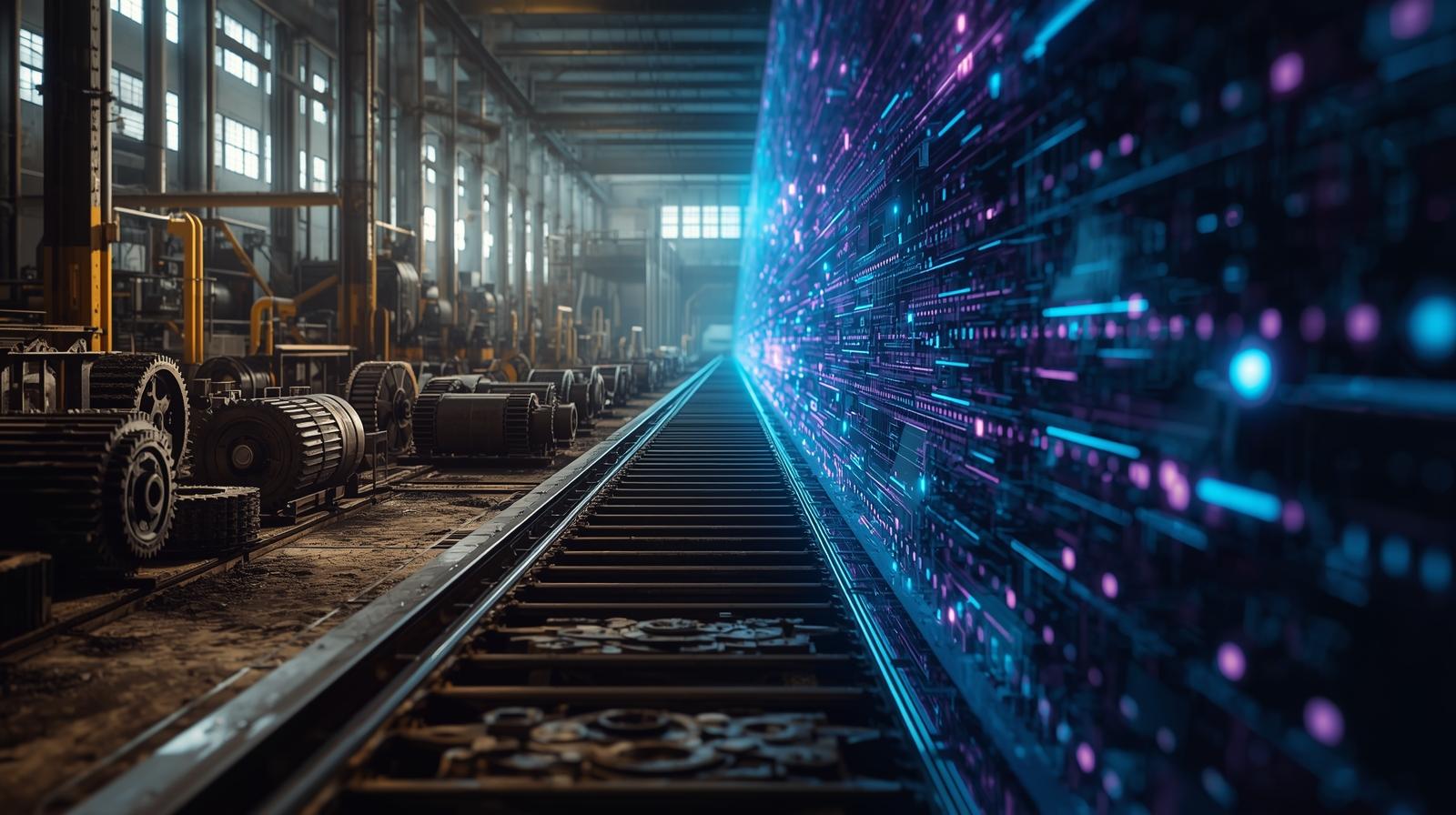
My career began in places that looked and sounded like the left side of my early life — gears turning, motors humming, wiring stretched across benches, and mentors who taught me to understand systems through touch, sound, and curiosity. Those spaces were my first classrooms. They shaped how I saw the world and how I learned to solve problems long before I ever stepped into a leadership role.
As I grew, I noticed something that stayed with me: some engineers could speak theory fluently but struggled to connect it to the realities of the plant floor. They knew the equations, but not the rhythm of the work. That gap shaped my leadership philosophy and my teaching. I promised myself I would never lose sight of the work that keeps the world running.
Today, the world our students are entering looks more like the image above — a place where robotics, automation, and AI sit side by side with human judgment. It’s a world where people stand in front of digital walls filled with data, guiding machines, interpreting patterns, and making decisions that no algorithm can fully replace. This is the “new blue collar,” where hands-on expertise is amplified by digital tools rather than overshadowed by them.
And here’s the truth the AI era is revealing: the physical world still matters. The people who understand it are irreplaceable. Factories, power systems, warehouses, and data centers don’t run on code alone. They run on people who can bridge the physical and the digital — people who can stand confidently in both halves of this image.
Students often believe their starting point limits their future. It doesn’t. If anything, the AI era is elevating the value of those who begin close to the work. Those who understand systems from the inside out. Those who learn by doing, observing, listening, and asking questions that come from real experience.
Your starting point is not a ceiling.
It’s a foundation.
My own trajectory — from hands-on beginnings to senior leadership, advanced degrees, and a lifetime of learning was built on curiosity, a plan, and the courage to dream often. Those ingredients create possibilities that multiply over time.
If you’re starting on the plant floor, in a lab, in a workshop, or in a technical program, remember this: you are standing exactly where the future is being built. Stay curious. Build a plan. Dream often. Your trajectory can take you further than you imagine.
