
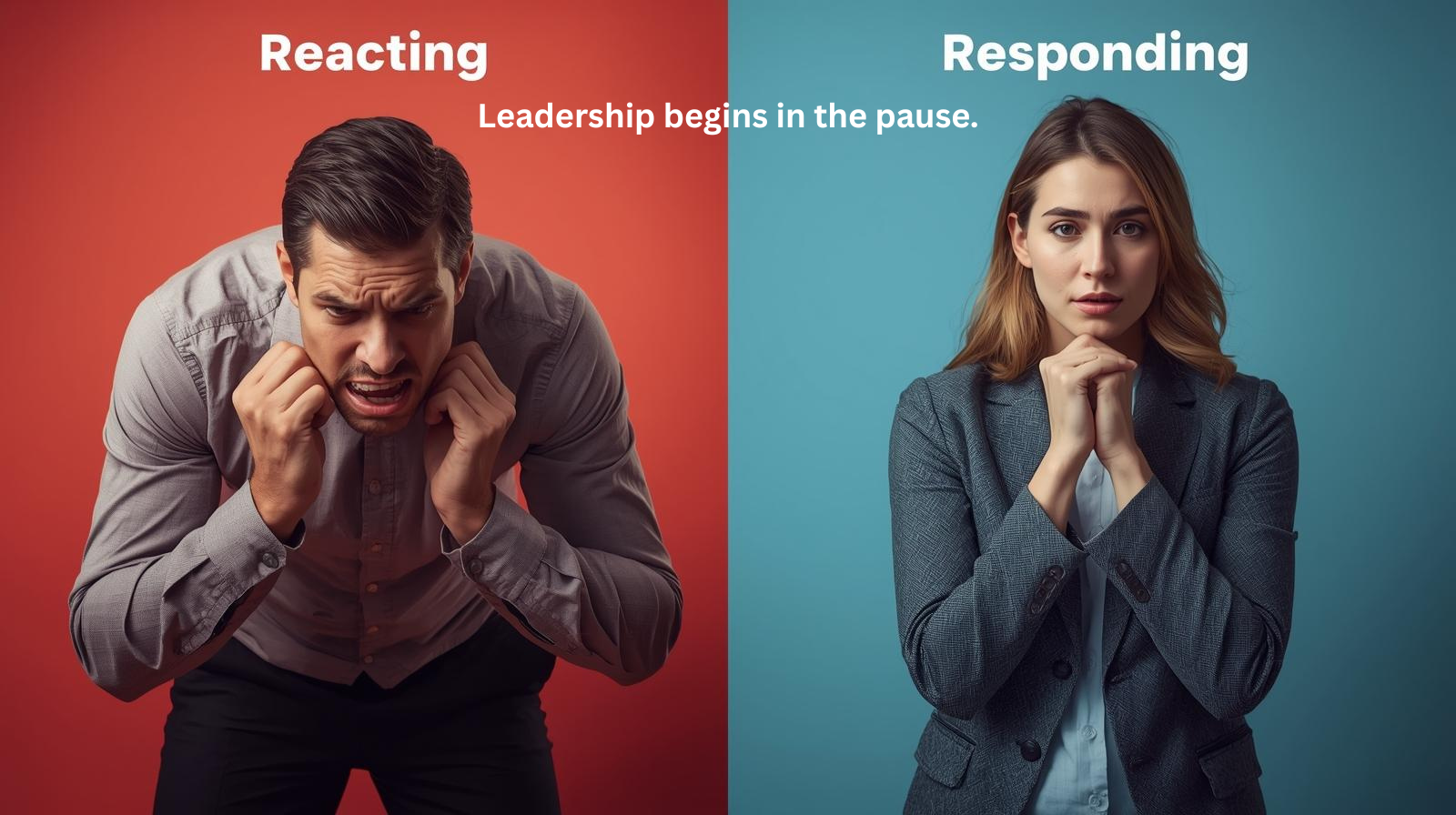


Reacting vs. Responding: The Inner Posture of Leadership and Learning
There is a moment, often invisible, often brief — that determines the quality of our decisions, our relationships, and our leadership.
It’s the moment between what happens to us and what we choose to do next.
Most people never notice this moment. They move from stimulus to reaction in a single breath. Urgency takes over. Emotion takes the wheel. And the result is predictable: rushed decisions, unnecessary conflict, and a sense of being pulled through the day instead of leading it.
Reacting is automatic. Responding is intentional.
Reacting is the nervous system doing what it was designed to do: protect.
Responding is the mind and heart doing what they were designed to do: discern.
Reacting is fast.
Responding is steady.
Reacting closes options.
Responding opens them.
Reacting is about the moment.
Responding is about the person you want to be after the moment.
Why this matters for students, educators, and leaders
In my teaching and consulting work, I see the same tension across generations and roles.
Students react to stress, deadlines, and uncertainty.
Educators react to pressure, disruption, and the emotional weight of supporting others.
Leaders react to complexity, expectations, and the pace of change.
But the individuals who grow, the ones who influence the emotional climate around them, learn to create a small sanctuary of space before they act.
That space is not passive.
It is active, intentional, and deeply human.
It is where clarity forms.
It is where dignity is protected.
It is where leadership begins.
How to practice responding
This week, I’m inviting my students and colleagues to try three simple habits:
1. Pause before you answer.
Even two seconds can shift you from automatic to intentional.
2. Name what you’re feeling.
You can’t respond wisely to what you refuse to acknowledge.
3. Choose the posture, not the performance.
Responding isn’t about sounding calm; it’s about being grounded enough to choose your next step.
The deeper truth
Responding is not about slowing down.
It’s about reclaiming authorship of your presence.
When we respond instead of react, we honour our values, protect our relationships, and model the kind of leadership that outlasts any moment of stress.
This is the foundation for the next two weeks:
Awareness → Leadership → Practice
Next week, we move from the inner posture to the outer expression:
How leaders create calm in chaos.
