

The Future of Work Is Being Rewritten — Are Our Students Ready?
We are living through a shift students can feel, but cannot yet name.
Every week, new headlines declare that AI is either saving work, destroying work, or replacing workers entirely. For young people standing at the beginning of their careers, this isn’t just confusing — it’s destabilizing.
At the same time, serious global analyses paint a very different picture. The World Economic Forum’s recent Strategic Intelligence update describes a world where:
“The main challenge is no longer a shortage of talent, but a mismatch of skills.”
This is the quiet truth beneath the noise. Not a collapse of work — a realignment of work.
And that realignment is happening faster than most educational systems, families, or students can process.
What students are hearing is noise. What they need is orientation.
Today’s learners are surrounded by contradictory messages:
- “AI will take all the jobs.”
- “Trades are safe forever.”
- “College guarantees a career.”
- “College is obsolete.”
- “There’s a labour shortage — you’ll be fine.”
- “There’s no work — you’re on your own.”
None of these statements help a young person make a decision. They create paralysis, not clarity.
At wvARC, we take a different approach: We slow the conversation down. We name what is real. We give students a compass, not a slogan.
What is actually changing?
1. AI is redesigning tasks, not eliminating human work
Automation is accelerating the parts of work that are repetitive, rules‑based, or data‑heavy. But the world still needs people who can:
- build
- repair
- install
- maintain
- troubleshoot
- design
- make ethical decisions
- ensure safety
The shape of work is changing — not the human need for competence.
2. Workflows are being rebuilt around AI-native operations
Organizations are restructuring how tasks flow, how decisions are made, and what “entry‑level” even means. Students entering the workforce today will see:
- fewer purely manual roles
- more hybrid roles (physical + digital + AI‑assisted)
- new responsibilities around oversight, judgment, and system literacy
3. The mismatch of skills is widening
Some traditional roles are becoming crowded.
Others — especially those requiring digital fluency, systems thinking, and adaptability — are facing acute shortages.
This is the real disruption:
Students are preparing for a world that no longer exists, while the world that does exist is not yet being explained to them.
What is not changing?
In the middle of all this movement, some anchors remain steady:
- Human judgment cannot be automated.
- Safety decisions require lived experience.
- Ethical responsibility cannot be delegated to a machine.
- Trades and technical fields continue to evolve, not disappear.
The future belongs to students who can combine hands‑on skills, digital fluency, and critical thinking.
A student’s compass for the AI-shaped future
At wvARC, we offer students a simple orientation framework — one that cuts through misinformation and restores agency.
1. See the shift clearly
AI is not a threat; it is a force reshaping how work is organized.
Understanding the shift is the first step toward navigating it.
2. Focus on skills, not job titles
Job titles change.
Skills travel.
The most resilient students build:
- problem‑solving
- communication
- adaptability
- digital literacy
- curiosity about new tools
3. Expect your career to have chapters
The old model — choose once, stay forever — is fading.
Careers will be iterative, with learning woven through every stage.
4. Stay curious about the tools
You don’t need to be an AI engineer.
But you do need to be comfortable with learning tools that will keep evolving.
5. Protect your judgment
In an age of misinformation, the ability to ask good questions is as important as any technical skill.
How wvARC supports students in this landscape
wvARC exists to help students move from confusion to clarity, and from fear to agency.
We translate global signals into local meaning
We bring insights from global research — including the World Economic Forum — into language
that makes sense for students choosing programs, apprenticeships, and early jobs.
We connect trades and technology
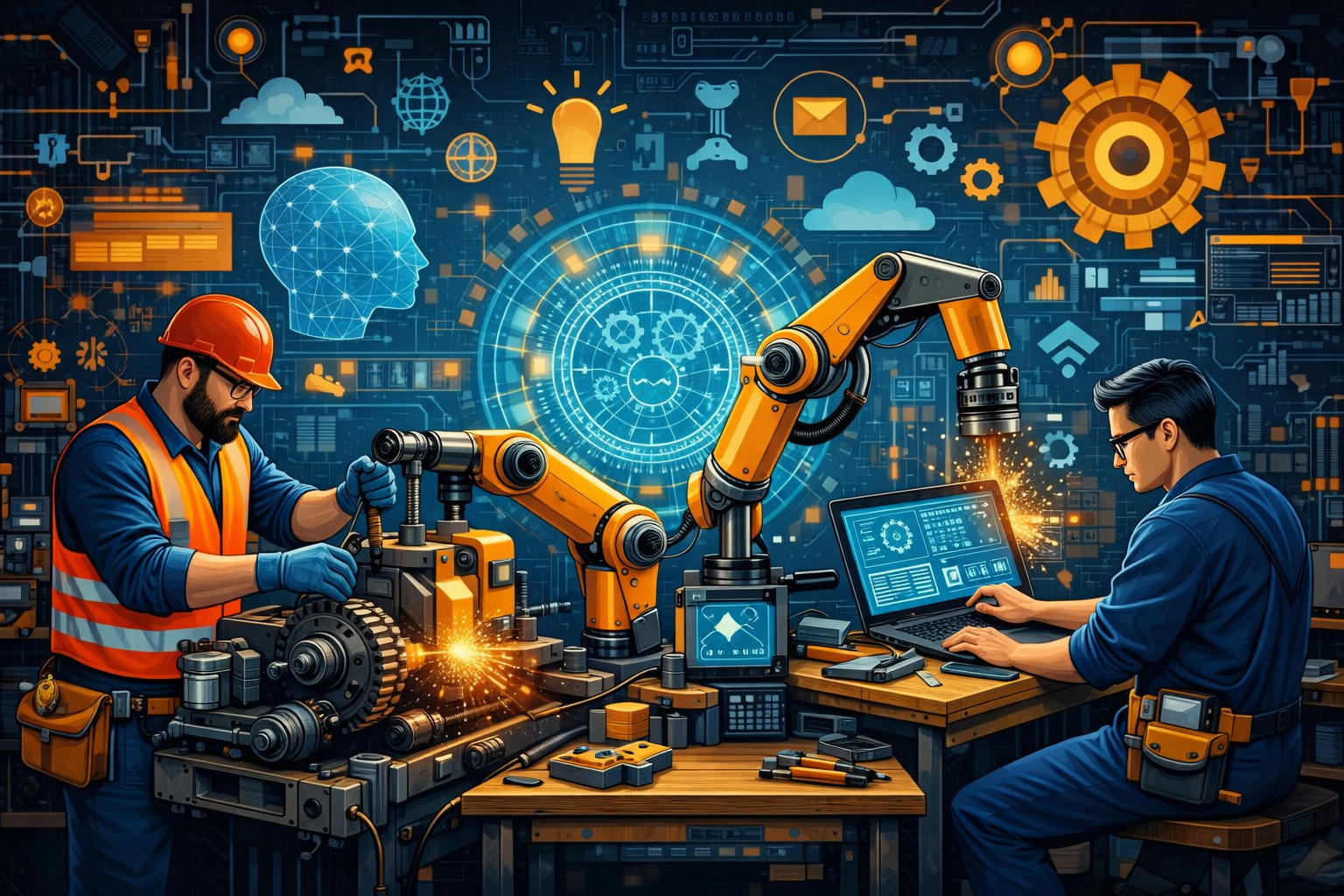
We show students how electrical, mechanical, and technical fields are evolving through automation, sensors, data, and AI.
We create a sanctuary for honest questions
Students need spaces where they can say:
- “I’m overwhelmed.”
- “I don’t know what to choose.”
- “What if I pick wrong?”
We honour those questions before we offer direction.
We emphasize agency over anxiety
Instead of “AI will decide your future,” we ask:
- “What kind of learner do you want to become?”
- “What skills do you want to be known for?”
- “How do you want to contribute to the world around you?”
A closing word to students
If you are a student reading this, hear this clearly:
You are not behind.
The world is shifting under your feet.
Your task is not to predict every change — it is to become the kind of person who can move with it.
Stay curious.
Ask better questions.
Choose environments that grow your skills, not just your credentials.
And if you’re unsure where to begin — that’s exactly why wvARC is here.
